3 min read

Open Source, Open Access, Open Future: Our Vision for Ethical Medical Device Innovation

Open Source, Open Access, Open Future: Our Vision for Ethical Medical Device Innovation


The World Doesn't Need More Medical Devices. It Needs Better Access to Them.

Three and a half billion people — nearly half the world's population — lack access to basic medical imaging.

Not because the technology doesn't exist. It does.

Not because we don't know how to build it. We do.

But because the current system optimizes for profit extraction rather than health outcomes. Because innovation happens behind closed doors, protected by patents and paywalls. Because the average cost to develop a medical device has ballooned to $119 million — a barrier that locks out 99% of potential innovators and prices out the communities that need these tools most.

This is not a technology problem. It's a coordination problem. And we believe open source is the solution.


Technology Must Serve a Bigger Purpose

We are living in a time where medical technology can see inside the human brain with millimeter precision. Where focused ultrasound can modulate neural activity without a single incision. Where optical imaging can measure blood flow in real time.

These are extraordinary capabilities. But capability without access is just potential — unrealized and unequally distributed.

At Openwater, we believe medical technology should not widen gaps or centralize power. It should empower researchers, strengthen healthcare systems, and create access where barriers once existed.

That belief guides everything we build.

Our approach is simple but intentional:

  • Open by design — because innovation multiplies when knowledge is shared
  • Ethical by default — because trust in medical technology cannot be optional
  • Community-first in purpose — because real impact begins with people, not products

These are not features we're adding. They are principles we're building on.


The Case for Open-Source Medical Devices

The open-source model has transformed software. Linux powers the internet. Android runs billions of phones. Kubernetes orchestrates the world's cloud infrastructure. These technologies succeeded not despite being open, but because of it.

Medical devices are long overdue for the same transformation.

When research is open, labs at Stanford and São Paulo can build on each other's work instead of duplicating it. When hardware designs are shared, a university in Nairobi can manufacture equipment of the same quality as a hospital in Boston. When software is collaborative, a graduate student's improvement benefits every researcher using the platform.

This is how ideas scale responsibly.

This is how communities grow stronger.

This is how medical technology becomes a shared asset rather than a gated privilege.

We're not naive about the challenges. Medical devices require rigorous safety standards, regulatory compliance, and quality assurance. Open source doesn't mean cutting corners — it means distributing the work of meeting those standards across a global community of experts who can collectively achieve what no single company could alone.


Ethics Is Not a Policy — It's a Practice

In medical technology, ethics cannot be an afterthought or a compliance checkbox. It must live inside every decision, every design choice, and every system we deploy.

When ethics lead:

  • Technology becomes inclusive, not exclusive
  • Innovation becomes sustainable, not extractive
  • Progress becomes meaningful, not performative

We see ethics not as a limitation on what we can build, but as a compass guiding us toward what we should build.

This means being transparent about what our technology can and cannot do. It means prioritizing safety over speed. It means designing for the researcher in a low-resource setting with the same care as the well-funded academic medical center.

It means asking, with every decision: Does this help more people participate in advancing human health?

If the answer isn't clear, we go back and redesign.


What We're Building

Openwater is developing open-source platforms for medical imaging and neuromodulation research. Our current focus areas include:

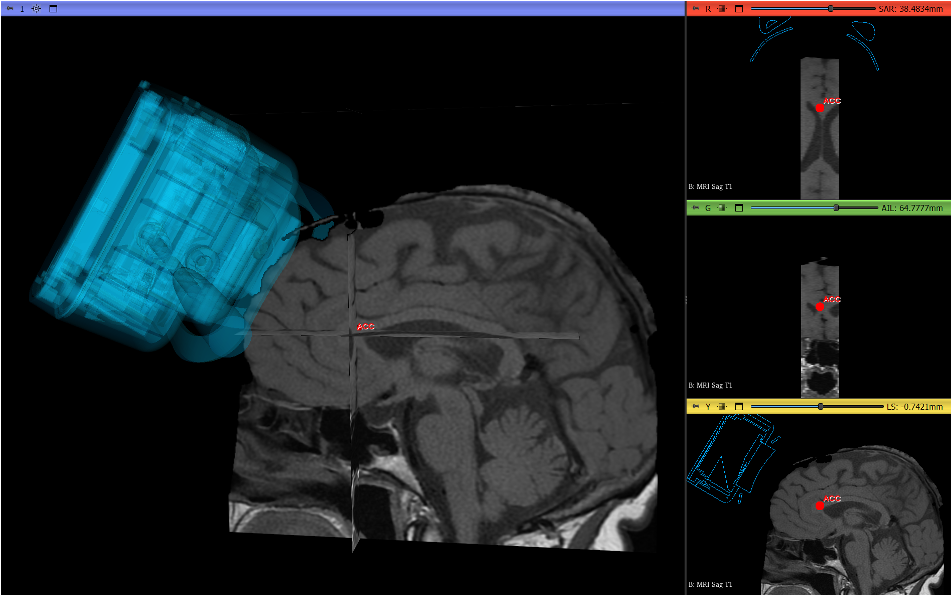
OpenLIFU — A complete toolkit for Low-Intensity Focused Ultrasound research, enabling non-invasive neuromodulation studies with millimeter precision.

OpenMOTION — Near-infrared optical imaging for real-time blood flow measurement and analysis.

Model Commons — A library of disease-specific AI models that researchers can use, improve, and share.

These platforms are actively used by research institutions exploring applications from basic neuroscience to early-stage investigations of neurological conditions. Our partners include leading academic medical centers who share our vision of collaborative, open innovation.

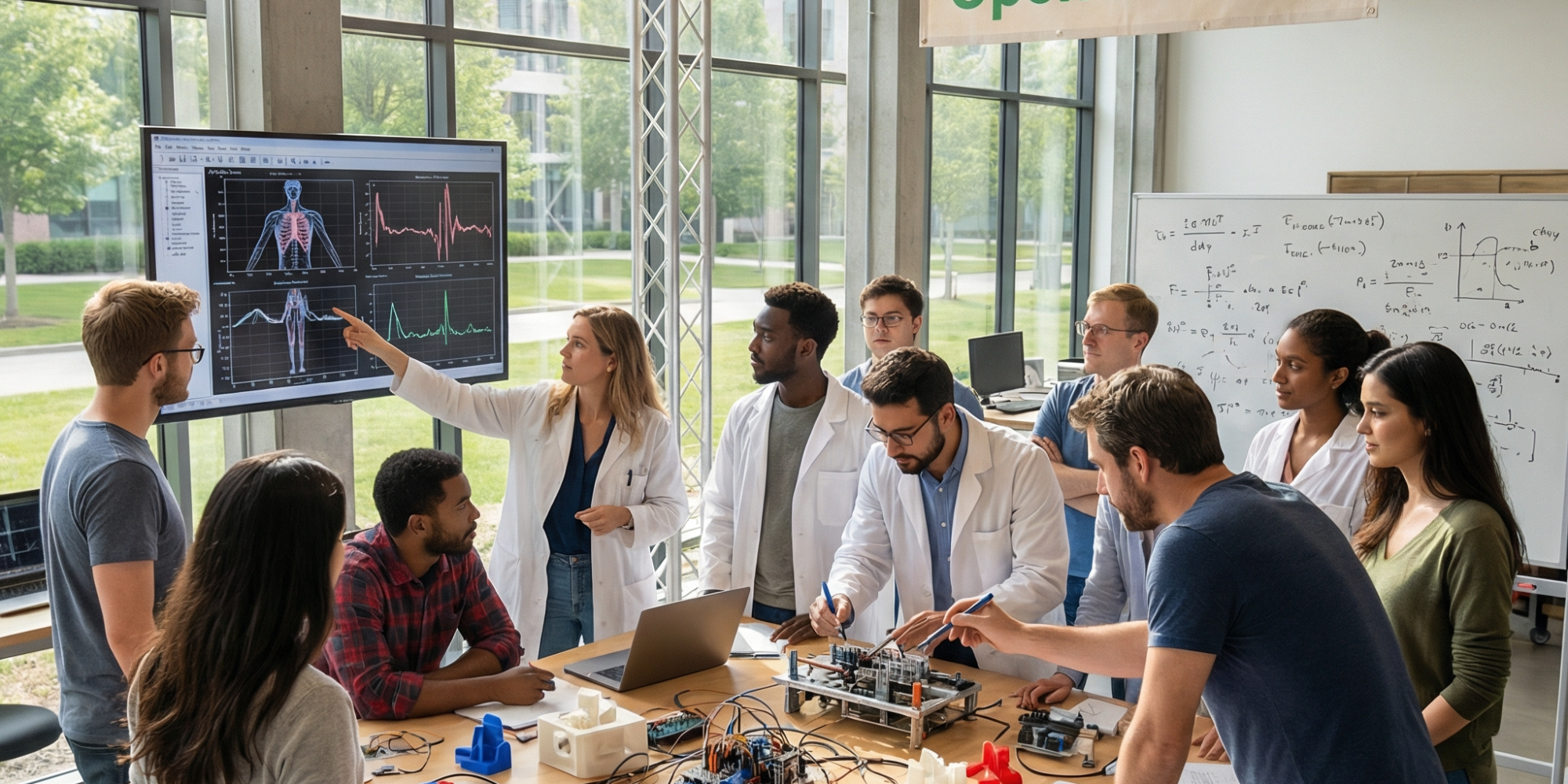
But the platforms are just the beginning. What we're really building is an ecosystem — a community of researchers, engineers, clinicians, and institutions who believe that the future of medical devices should be written together.


The Road Ahead

The future of medical technology won't be defined by how advanced our tools become — but by how many people can access and benefit from them.

Vision without ethics leads to imbalance. Ethics without action leads to stagnation. True progress lives in the space where vision meets responsibility.

We're calling this effort Openwater Commons — because we believe the knowledge needed to heal should be a commons, not a commodity.

Our commitment is clear:

To build technology that expands access.

To create platforms that serve researchers and communities worldwide.

To ensure that progress in medical devices includes everyone — not just those who can afford it.

Because when values lead, innovation follows.


Join Us

We're just getting started, and we're looking for collaborators who share this vision.

Whether you're a researcher exploring neuromodulation, an engineer passionate about open hardware, a clinician who sees the access gaps firsthand, or simply someone who believes healthcare innovation should serve humanity — we'd love to hear from you.

Explore our platforms: https://github.com/OpenwaterHealth

Join the community: https://openwaterhealth.github.io/openwater-community/

Start contributing: https://openwaterhealth.github.io/openwater-community/get-started.html

Questions? Reach out at community@openwater.health

The future of medical devices is open. Let's build it together.


This is the first post in our blog series exploring Openwater's vision, technology, and community. Next up: Inside OpenLIFU — a technical deep-dive into our open-source focused ultrasound platform.