Opensource • Feature Rich

Open-LIFU

Low-Intensity Focused Ultrasound

Modular and configurable for many applications

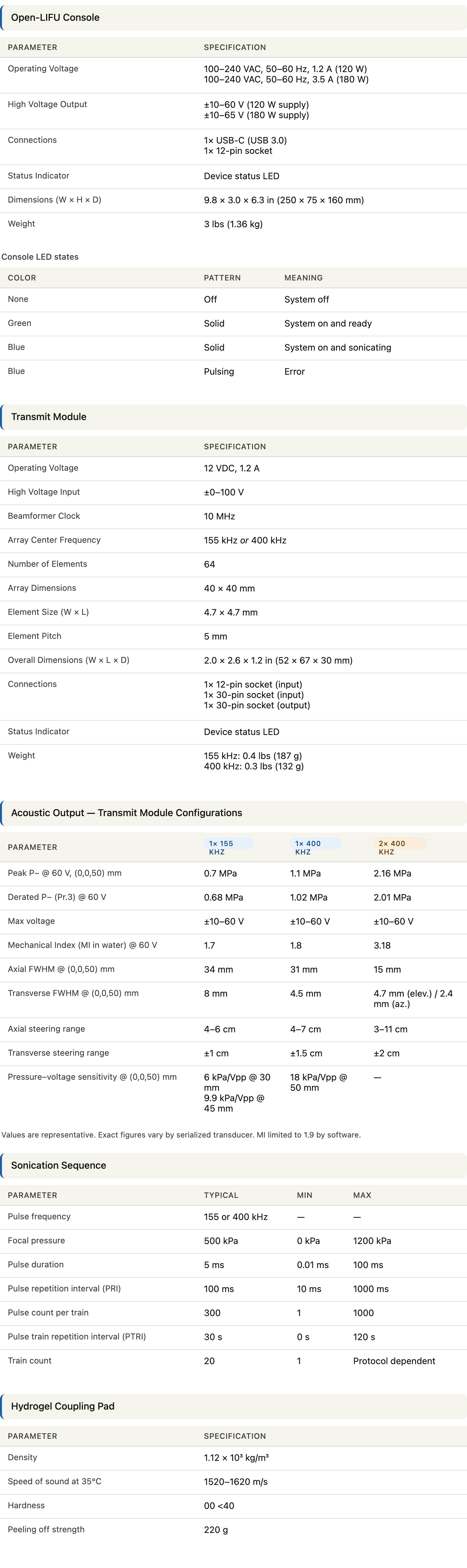
  • Transmit Modules64-Ch, synchronized, cascading tiles.
  • Two Center Frequencies155 KHz & 400 KHz
  • Android Targeting AppPhotogrammetry
  • Open-Source PlatformGUI, 3D Slicer or Python Control

Powerful Neuromodulation Platform
Visualization

tFUS Configuration

2x Transmit Modules (128 Ch.)
Steering X0.0 cm
Steering Y0.0 cm
Focus Depth30.0 mm
Focal Width3.2 mm
Peak Pressure0.84 MPa

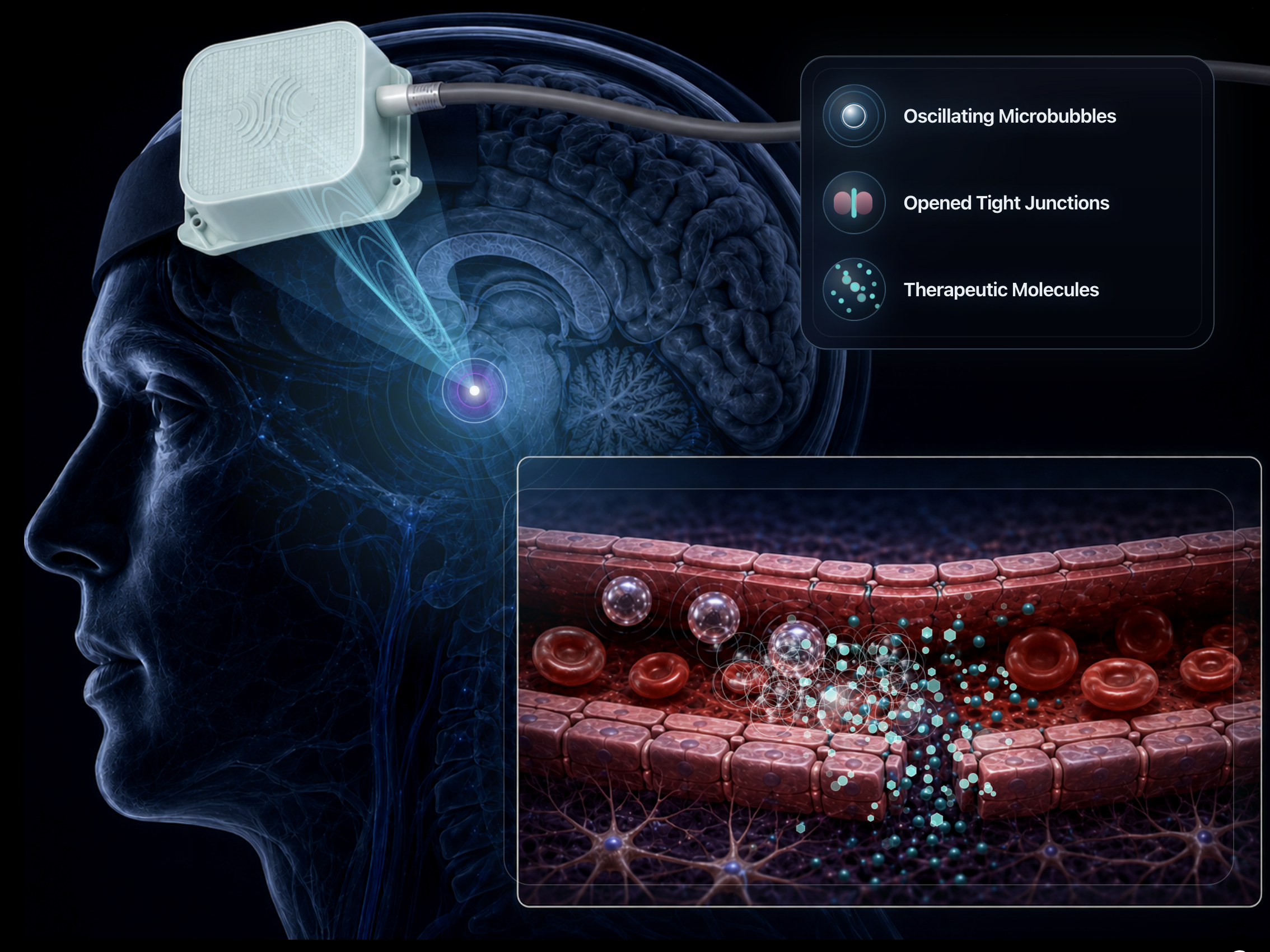
Non-Invasive Neuromodulation

Steerable Beamforming

±3 cm/ ±7 cm Lateral/Axial Steering

System Overview

Designed and manufactured as a medical-grade consumer device.  Open-LIFU is unrivaled in its capability and flexability.  No other system comes close.

Learn More
LIFU-Modules-Dark

Software Control

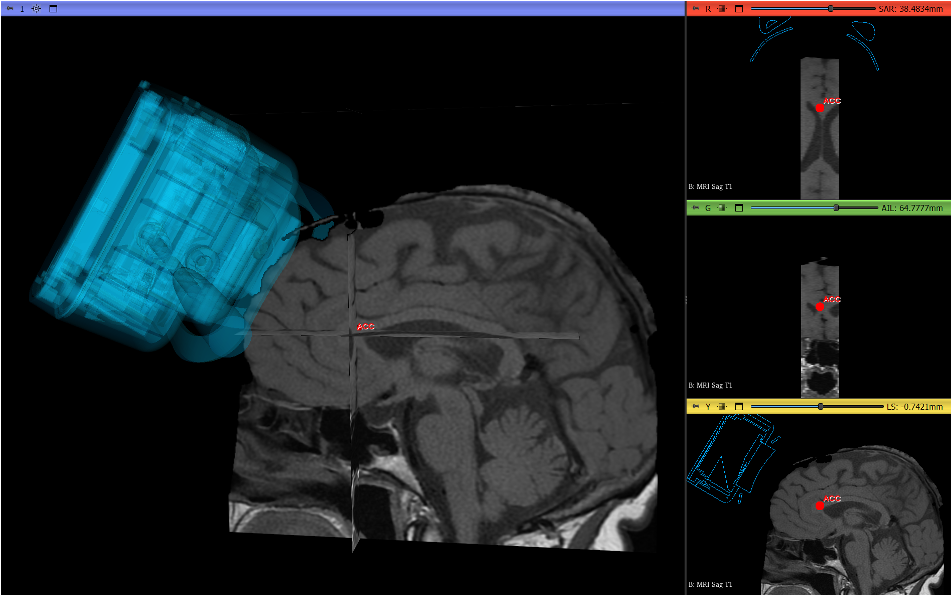
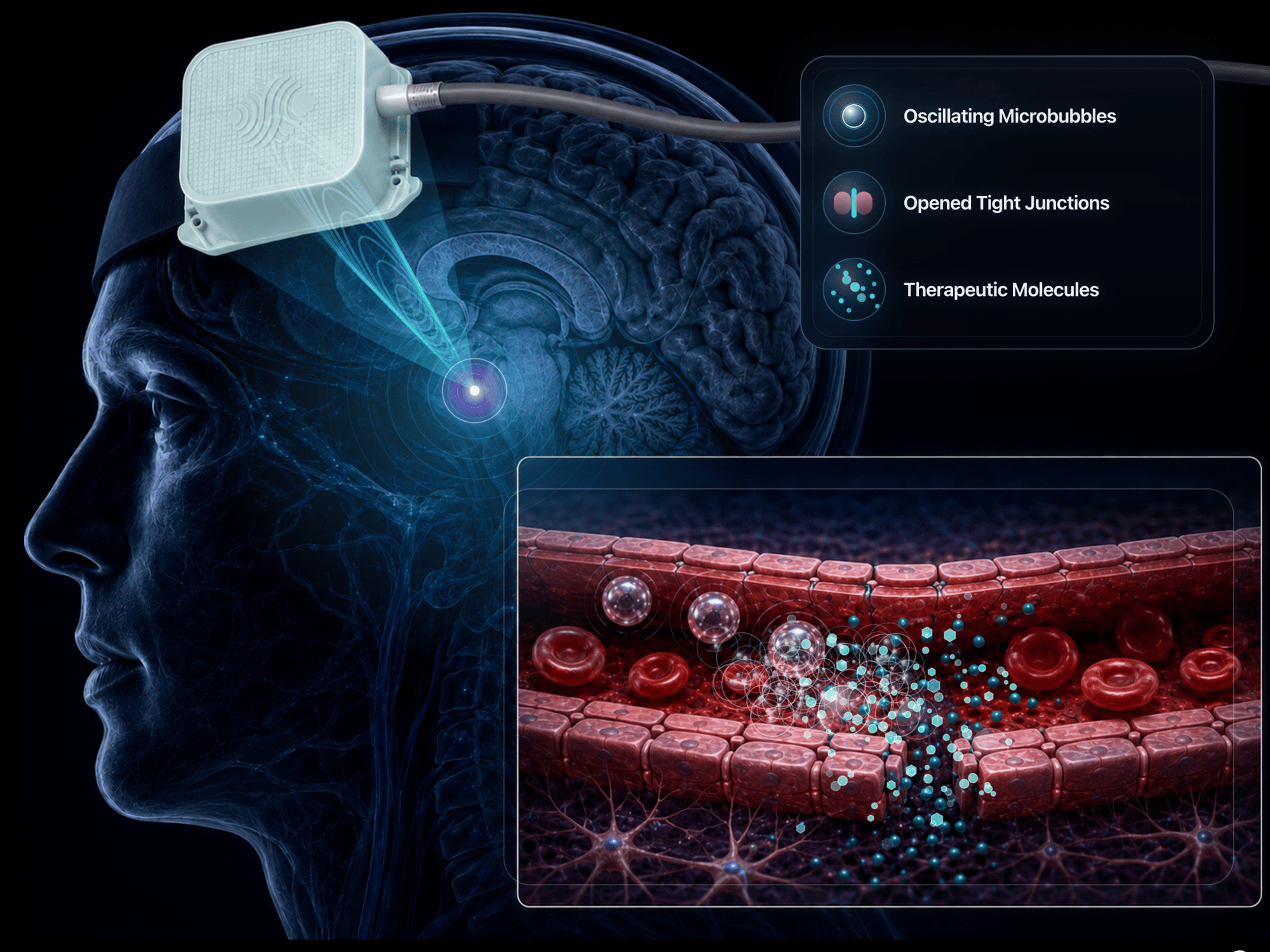
By precisely timing when each element fires, Open-LIFU's 2D matrix array concentrates acoustic energy anywhere in a three-dimensional volume — no mechanical repositioning required.
Learn More

lifu1

Applications

Open-LIFU can be configured to perform a variety of applicaitons.

Read More
Screenshot 2026-05-10 at 4.36.25 PM

Open-LIFU:
(LOW-INTENSITY FOCUSED ULTRASOUND)

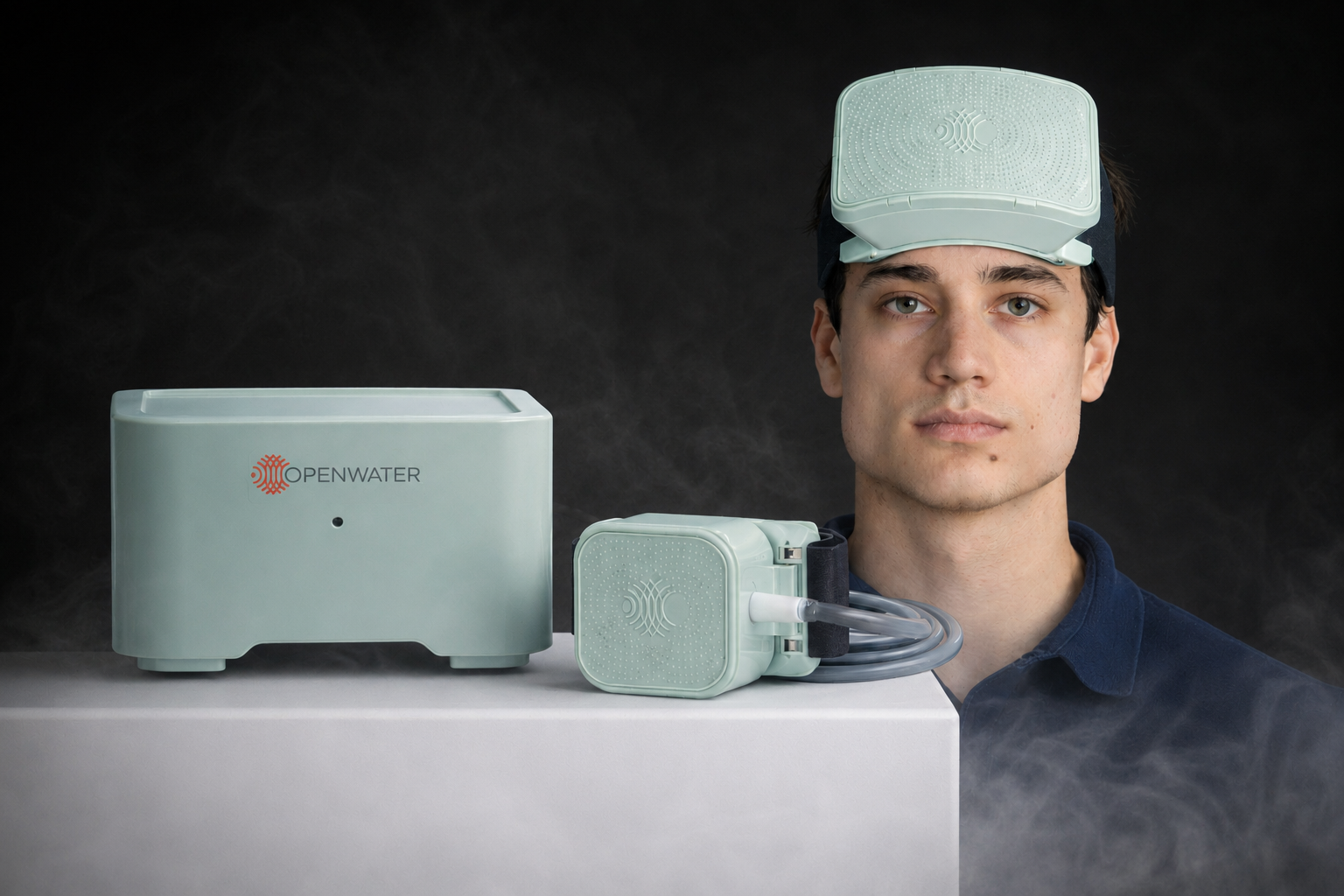
Openwater’s Low Intensity Focused Ultrasound (LIFU) platform for research.  The platform is flexible, easy-to-use, and can deliver LIFU to targets located nearly anywhere in the head or body. While Open-LIFU 2.0 devices are ready to set up “out of the box”, their open-source design allows customization and modification to support clinical research across diverse users and applications. At the same time, Open-LIFU 2.0’s controlled design features make it an effective solution for developing regulated medical devices that are portable and low-cost. By filling the gap between expensive research hardware available for proof-of-concept studies and commercially manufacturable hardware suitable for regulated medical devices, Open-LIFU 2.0 greatly facilitates the translation of novel therapies from bench to bedside.

Research Spotlight

Webinar: Transcranial Focused Ultrasound Neuromodulation of the Default Mode Network in the Treatment of Depression and Promotion of Wellness

Repetitive Negative Thinking (RNT)—including rumination and worry—is a transdiagnostic cognitive process central to major depressive disorder (MDD), generalized anxiety disorder (GAD), and obsessive-compulsive disorder (OCD). Elevated RNT is linked to increased connectivity within the brain’s Default Mode Network (DMN), which supports self-referential thought and is often hyperactive in these conditions.  Emerging evidence suggests that low-intensity transcranial focused ultrasound (litFUS) may reduce Repetitive Negative Thinking (RNT) and mood-related symptoms in clinical populations, and also promote emotional wellness in nonclinical groups.

Learn More:

Learn More Today