Wearable optical sensing for real-time cerebral perfusion measurement.
Cerebral or peripheral perfusion measurement delivered in a portable, open-source device. Elevate your insights.
3.20Average blood flow index
3.23Average blood volume index
0.04Left/right asymmetry
Open-Motion Acquisition
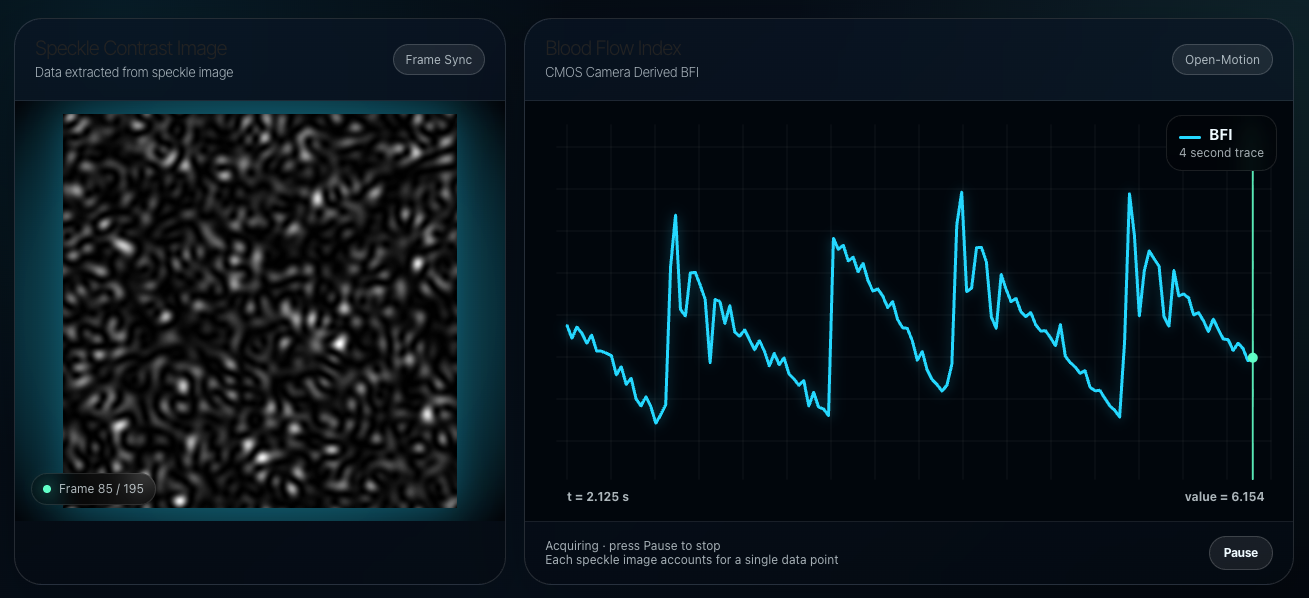
Real-Time Hemodynamics
BFI Left
BFI Right
BVI Left
BVI Right
BFI Left
3.21
BFI Right
3.22
BVI Left
3.20
BVI Right
3.24
P-SCOSPulsed-Speckle Contrast Optical Spectroscopy can measure blood flow and volume up to 3.5 CM into the brain.
Real-TimeThe signal sample rate is 40 Hz. P-SCOS is not dependent on the BOLD response.
Hemodynamic extractionLeft/right BFI and BVI traces are estimated in real time from the optical stream.
Clinical Research InsightsOpen-Motion outperformed both RACE and LAMS for the detection of LVO in patients presenting for acute stroke evaluation.
Open-Motion
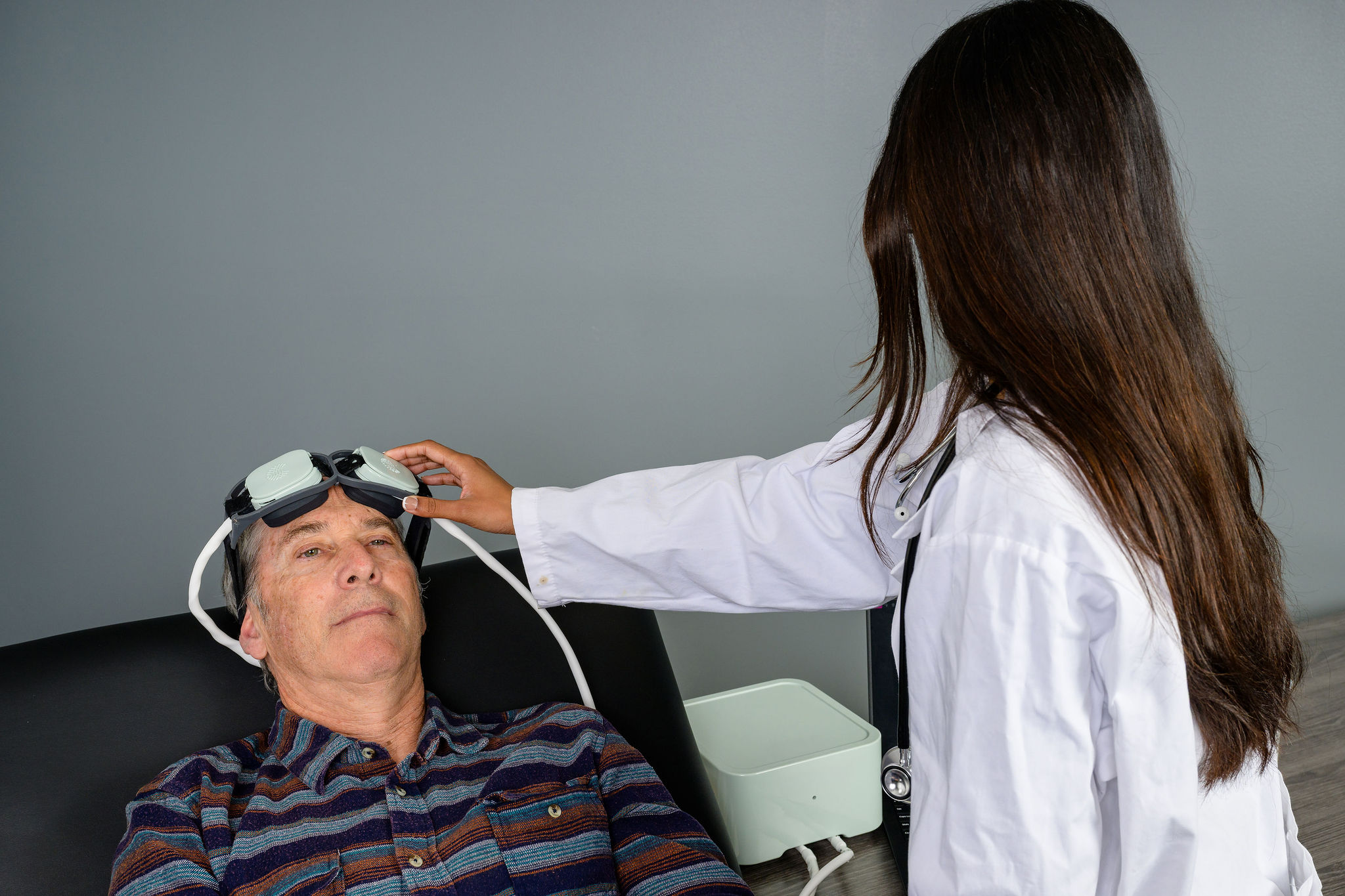
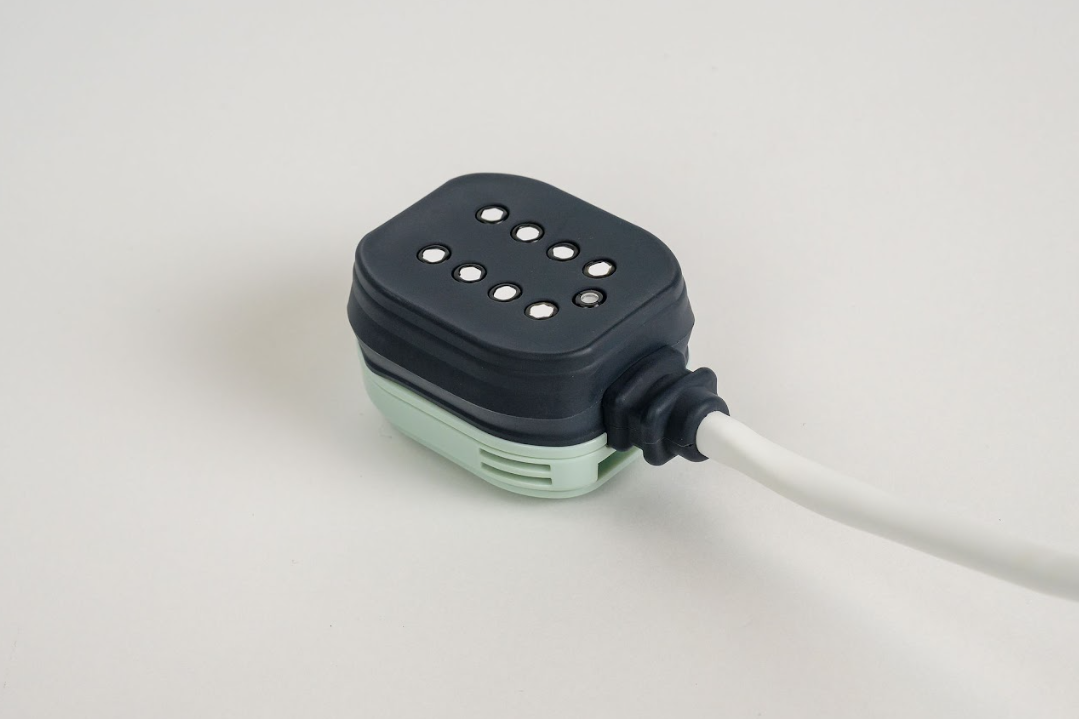
The Open-Motion hemodynamic platform uses low intensity near-infrared light to measure blood flow, blood volume, and micro-motions deep under the tissue surface. Ready to use out of the box, and also as an open source architecture that allows for customization to suit a wide range of research needs. Standardized design features ensure that clinical studies conducted with these tools can generate critical data to inform the development of future portable, low-cost medical devices.
Key Features
A monitoring platform designed for noninvasive measurement of blood flow, blood volume, micro-motions, and oxygenation deep beneath tissue surfaces.
Wearable, modular design for a wide range of applications
Microsecond laser pulses with high sensitivity and minimal exposure
Machine learning ready for real-time classification and analysis
Compliance with IEC 60601-1; ISO 13485 certification in process
Complete platform or OEM hardware/software components
Open-Source
For Research Use Only. Not for use in diagnostic procedures.
Open-Motion is a next-generation speckle contrast imaging system. It improves on previous techniques, while lowering the cost due to Openwater's open-source platform consumer-grade manufacturing process.
Large vessel occlusion, or LVO, is one of the most serious forms of ischemic stroke. It occurs when a major artery supplying the brain becomes blocked, sharply reducing blood flow and oxygen delivery to brain tissue. Because these blockages affect large areas of the brain, LVO strokes can lead to severe disability, loss of independence, or death if not treated quickly.
Openwater’s portable optical blood flow monitor may improve stroke triage by detecting large vessel occlusions directly at the bedside. In a 135-patient study, the wearable system completed a 70-second scan and used deep learning to analyze cerebral blood flow waveforms, achieving 79% sensitivity and 84% specificity—outperforming common stroke scales such as RACE and LAMS.