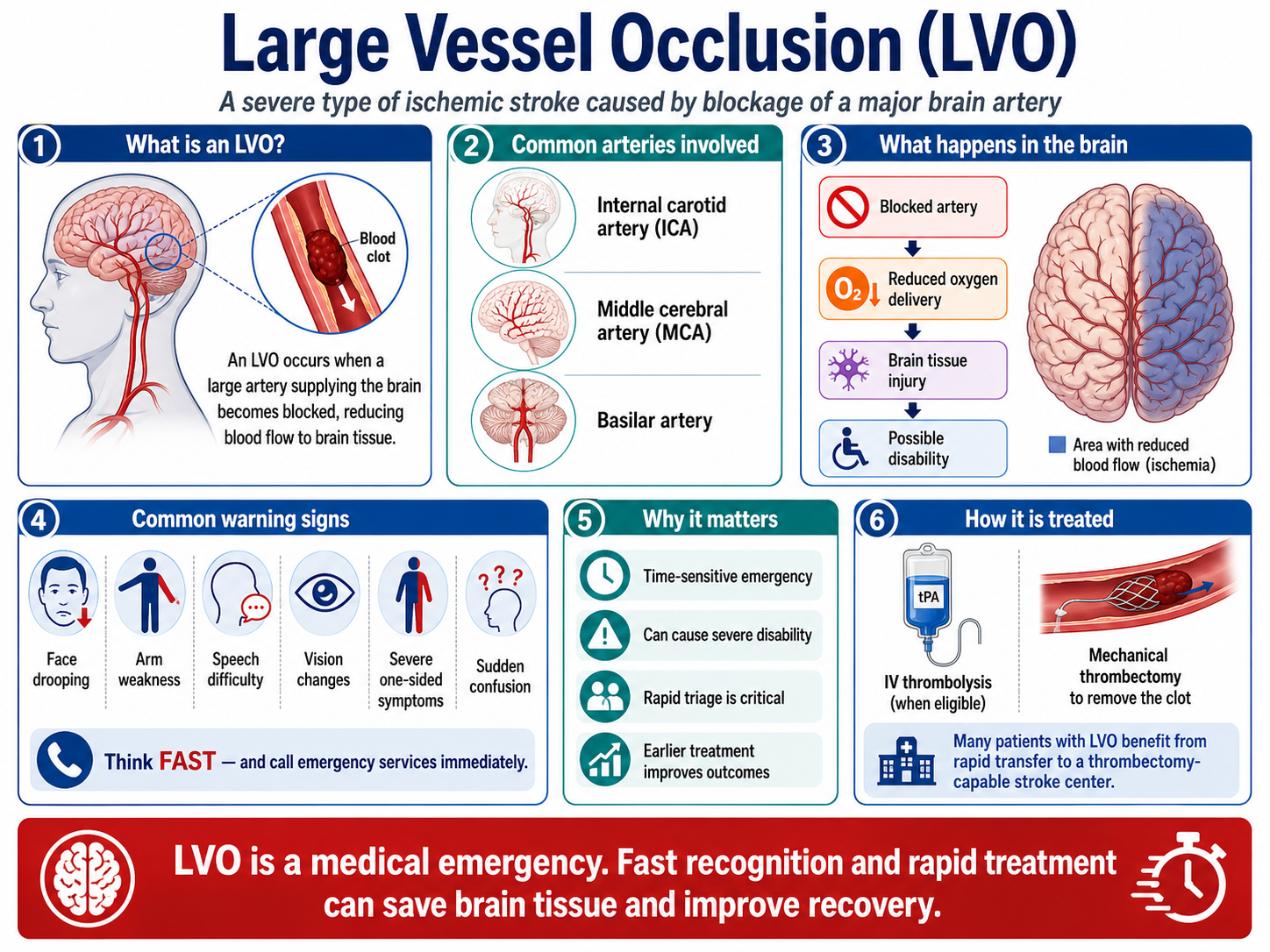
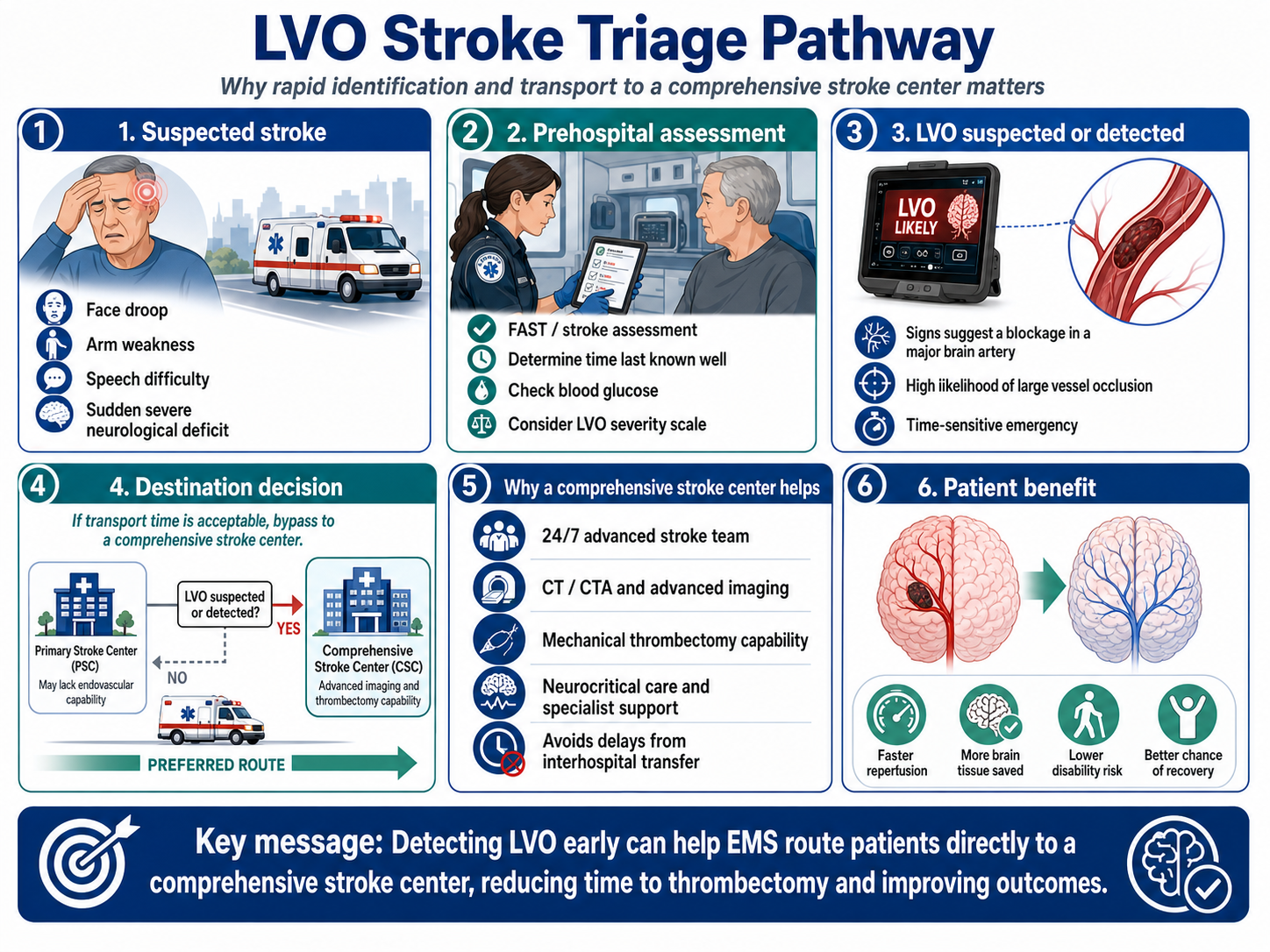
A clinical study published in the Journal of NeuroInterventional Surgery evaluated whether the Openwater portable optical blood flow monitor could help detect large vessel occlusion (LVO) in patients with suspected stroke. LVO is one of the most serious forms of ischemic stroke and often requires rapid treatment at a thrombectomy-capable or comprehensive stroke center. Because treatment outcomes are highly time-sensitive, earlier identification of LVO may help emergency teams route patients to the right level of care more quickly.
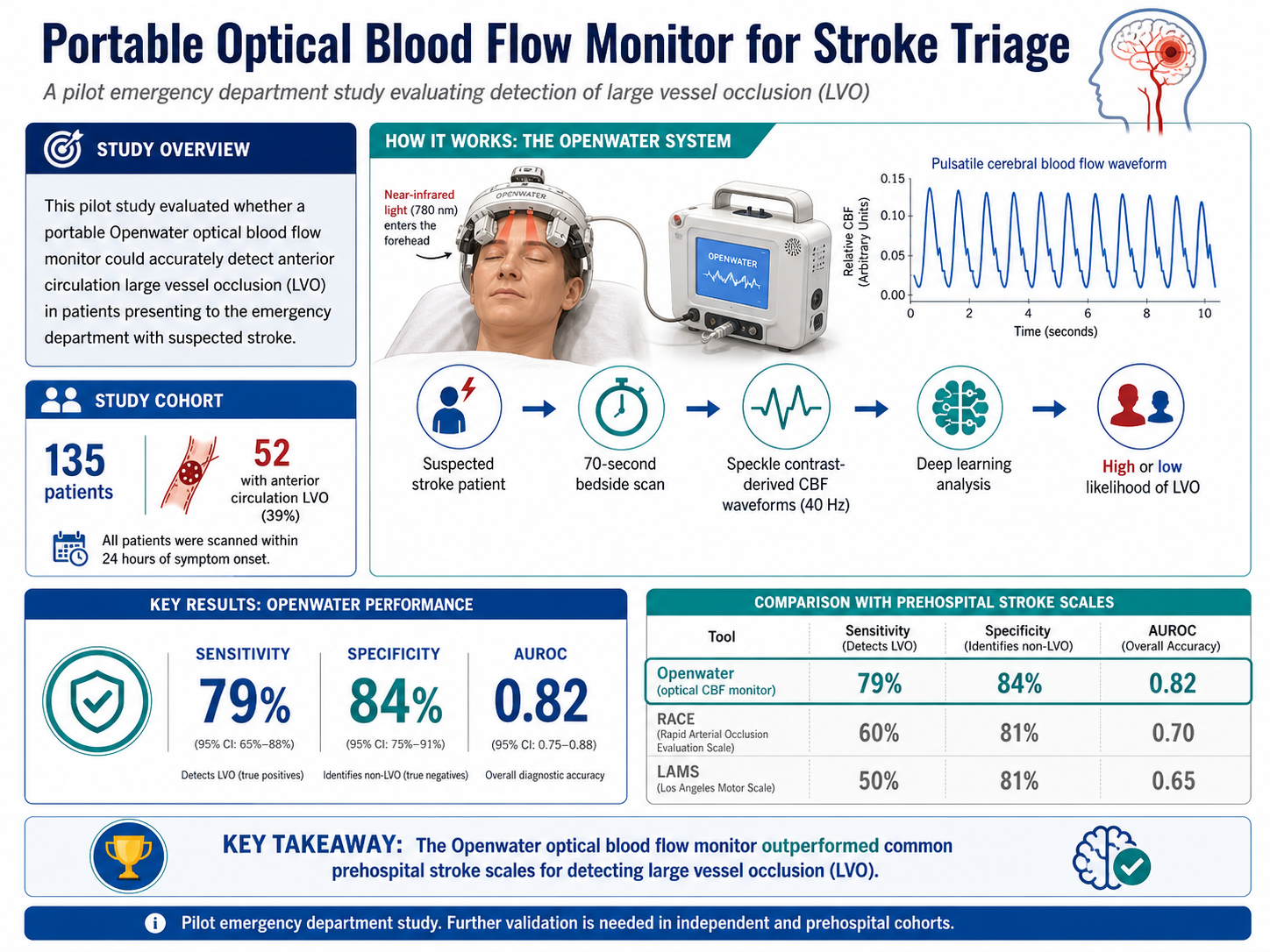
The study enrolled 135 patients undergoing acute stroke evaluation at two comprehensive stroke centers. Each patient received a 70-second bedside scan using the Openwater optical blood flow monitor, a wearable headset that measures cerebral blood flow waveforms from the forehead using speckle contrast-based optical sensing. These waveforms were then analyzed with a deep learning model to classify patients as having a high or low likelihood of LVO.
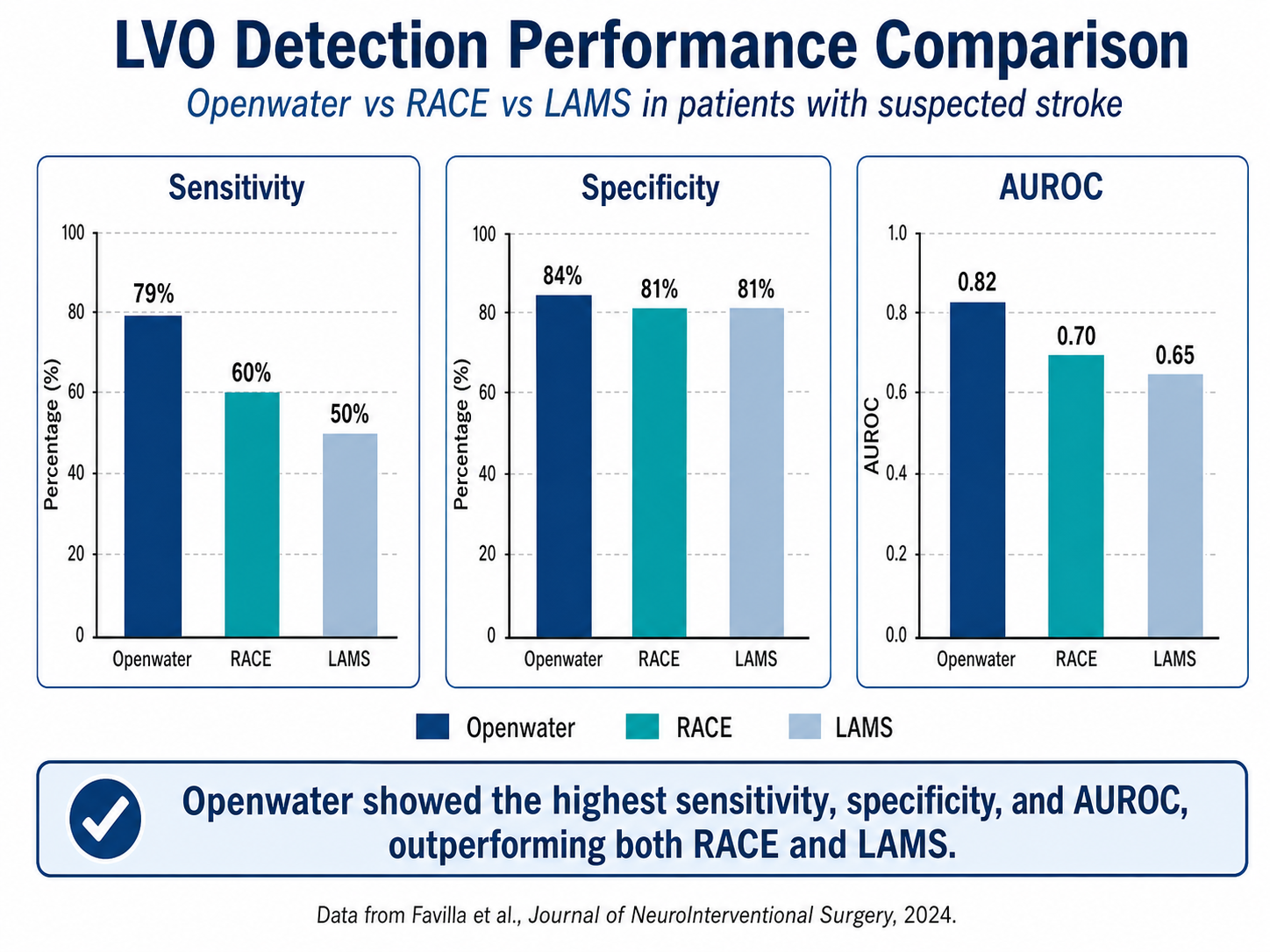
The Openwater system demonstrated strong diagnostic performance, detecting LVO with 79% sensitivity and 84% specificity. In the study, it outperformed commonly used prehospital stroke severity scales, including RACE and LAMS, which had lower sensitivity for identifying LVO. The Openwater classification achieved an AUROC of 0.82, compared with 0.70 for RACE and 0.65 for LAMS.
These findings suggest that direct, non-invasive measurement of cerebral blood flow may offer a promising new approach for stroke triage. By helping identify patients with a high likelihood of LVO, portable optical monitoring could support faster routing decisions, reduce delays to thrombectomy, and improve the chances that patients receive the right care at the right facility.
The authors note that these results are encouraging but require further validation in an independent test set and in real-world prehospital environments. If confirmed, the Openwater optical blood flow monitor could become an important tool for emergency stroke assessment and patient routing.
Favilla, C. G., Baird, G. L., Grama, K., Konecky, S., Carter, S., Smith, W., Gitlevich, R., Lebron-Cruz, A., Yodh, A. G., & McTaggart, R. A. (2024). Portable cerebral blood flow monitor to detect large vessel occlusion in patients with suspected stroke. Journal of NeuroInterventional Surgery. Advance online publication. https://doi.org/10.1136/jnis-2024-021536